
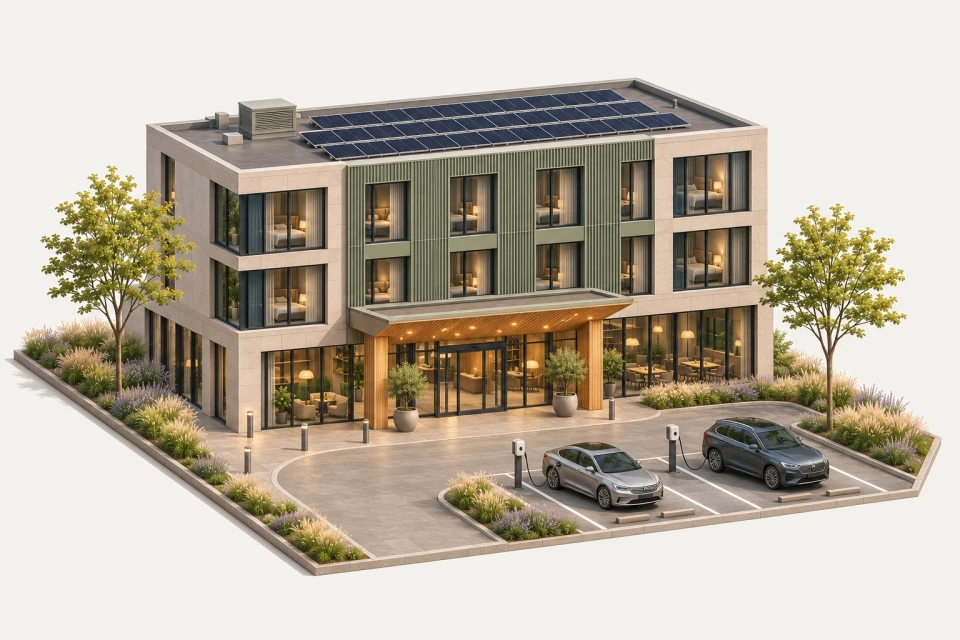
A full dining room. Room to charge.
At six, guests are checking in, dinner service is in full swing and the first cars are plugging in. Stroomlijnen adjusts guest charging to the power your hotel can spare at that moment.
Guest charging
How much charge before checkout?
A guest leaving early tomorrow wants to know what to expect tonight. A charging reservation lets you check whether you can meet their request before accepting it.
The guest tells you what they need
For example, 30 kWh by 07:00. The hours the car will spend at the hotel give you a window in which to plan its charging.
The EMS checks capacity
It checks the request against expected hotel demand and existing commitments. If the request fits, it sets aside power during that window.
The guest plugs in on arrival
The hotel arranges the parking space. The charger, the car and when the guest plugs in all affect how much energy the car actually takes.
Energy requested
30 kWh is the amount of energy requested. The power supplied to the car, in kW, can change throughout the night.
Configurable energy management
Your hotel sets the priorities.
A conference on Tuesday, a full restaurant on Saturday. You decide with us which activities take priority. We write those choices into the rules for your energy management system (EMS). Priorities can vary by time of day, season or event.
- During dinner service
- The kitchen takes the power it needs. Flexible charging sessions can slow down for a while. Capacity already promised to guests counts towards every new booking decision.
- Before an early departure
- Specify the energy a guest needs and when they leave. The EMS checks the request and schedules a reservation it can accommodate. Cars staying longer can use the hours around it.
- With solar or storage
- Use solar power in the building and at the chargers. A suitable battery can store the surplus for the evening. With a variable electricity tariff, you can move flexible charging to cheaper hours.
We check these settings against your 15-minute meter data, the load on each phase and the equipment on site. With storage, the available charge and the battery reserve also count.
How the EMS allocates powerOne grid connection, three moments
Illustrative hotel with a 100 kW import limit.
- Hotel demand
- 80 kW
- Reserved charging
- 11 kW
- Flexible charging budget
- 9 kW
The kitchen is in full service. Flexible charging has less power available while hotel demand is high.
| Time | Hotel demand | Reserved charging | Flexible charging budget |
|---|---|---|---|
| 16:00 Arrivals | 55 kW | 11 kW | 34 kW |
| 19:00 Dinner | 80 kW | 11 kW | 9 kW |
| 23:00 Overnight | 35 kW | 11 kW | 54 kW |
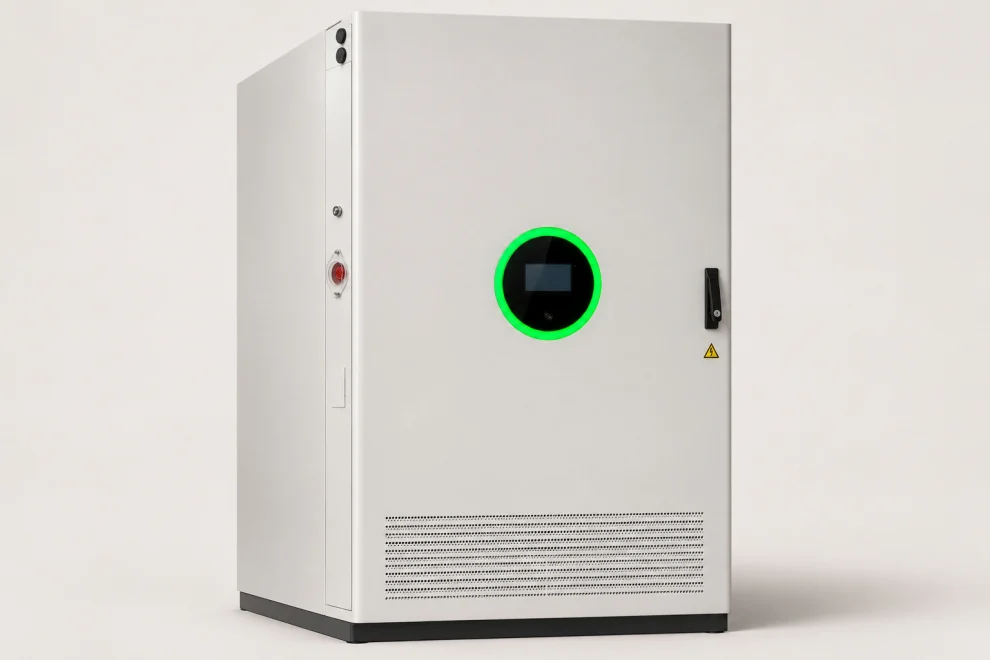
- Nominal storage
- 261 kWh
- Bidirectional power
- 125 kW
Battery storage
Save the sunshine for dinner service.
Can your grid connection cover dinner service and guest charging at the same time? The ESS 261 can store surplus solar power during the day and supply extra power during a peak. Your 15-minute meter readings show the size of the peak and whether there is time to recharge before the next one.
Before choosing a location, you’ll want to know how the battery is monitored, what happens during an alarm and what evidence your insurer can review.
Explore the six safety layersIn development · 2027–2028
Book a room, with power to charge.
We are developing integrations with hotel reservation systems. The aim is for a guest to select a charging window when booking a room, with an agreed power budget included in the room rate or package.
Room-booking integration is on the 2027–2028 roadmap. The EMS can already check the feasibility of a separate charging reservation.
- Charging window
- 22:00 – 06:00
- Agreed charging budget
- 7 kW
Example budget for one vehicle, subject to available capacity.